The Kodak 35mm Slide & Film Viewer review is for anyone sorting through old 35mm slides or negatives and wanting a quick way to see what each frame holds.
Its illuminated viewing area, 3X magnification, and slide and film inputs make it a straightforward personal viewer rather than a projection or digitizing setup.
Kodak Film Viewer Review Summary
The quick verdict
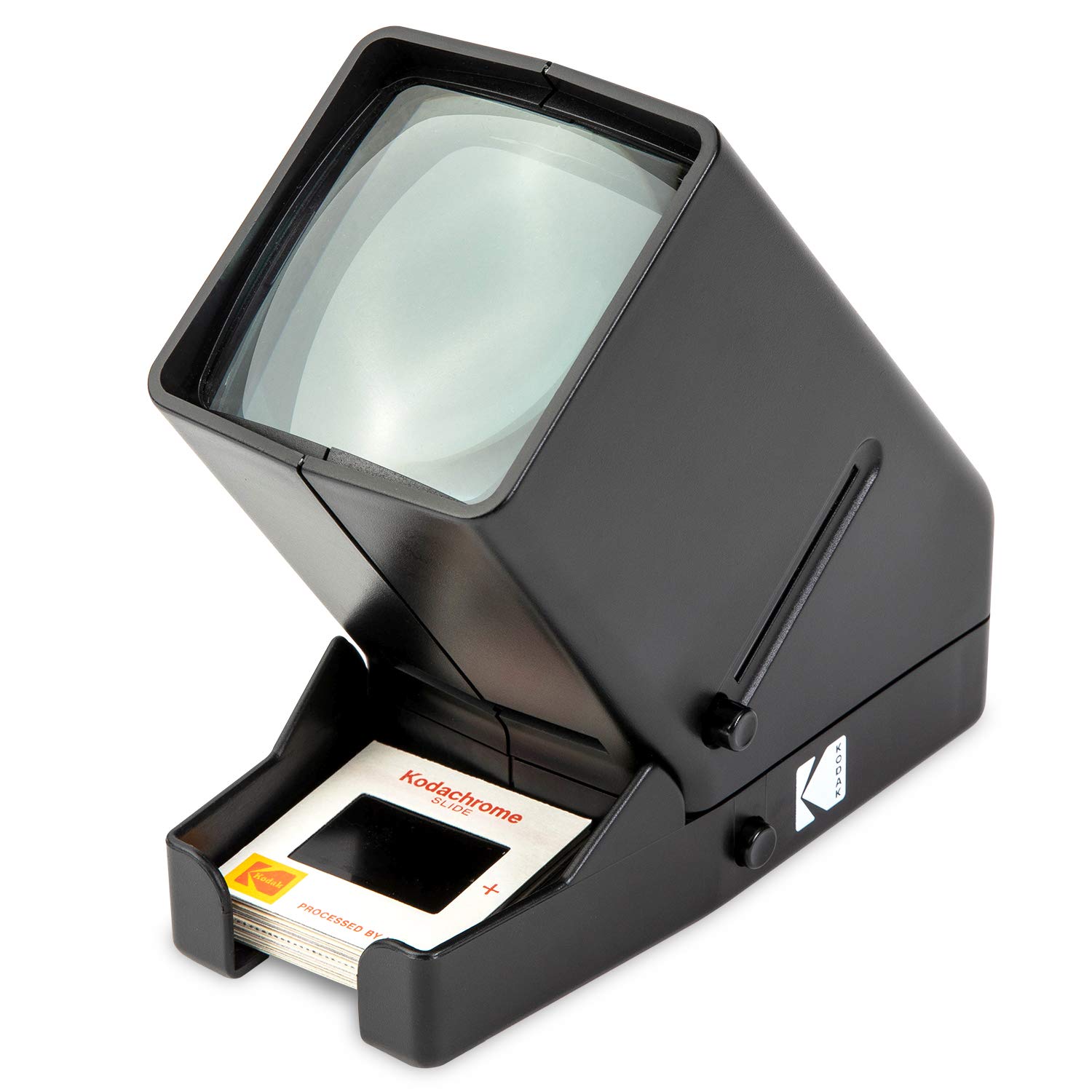
3,000+ ratings
Read Amazon ReviewsKodak 35mm Slide & Film Viewer
A portable, battery-operated viewer for people who want to inspect 35mm slides and film negatives without setting up a projector.
- Designed for 35mm slides and film negatives.
- A large viewing area is illuminated by a daylight LED.
- Built-in magnifier lens provides 3X magnification.
- Dedicated slide slot and film input let you load a frame for viewing.

Pros
- Combines illumination and magnification in a personal viewing device.
- Accepts both 35mm slides and film negatives.
Consider before buying
- Its stated format support is limited to 35mm slides and film negatives, so check your collection before buying.
- The DC cable is sold separately, which adds a separate power accessory to consider if you prefer wired use.
Read the full review summary
This handheld viewer is designed to make small film images easier to inspect. A daylight LED illuminates the viewing area, while the built-in magnifier enlarges images by 3X.
Dedicated slide and film inputs, along with a quick-eject button, support a simple repeatable routine: insert a frame, take a look, and move on.
Battery operation makes it convenient to carry between rooms or use away from a fixed workstation.
The main tradeoff is scope: it is for viewing 35mm slides and film negatives, not a substitute for a projector or a digital film scanner.
Consider it if your priority is browsing physical film one frame at a time.
The buying factors
Kodak Film Viewer Scorecard
Editorial scores reflect listed features and buyer fit; they are not laboratory measurements or customer ratings.
Ease of frame-by-frame viewing
Dedicated slide and film inputs plus a quick-eject button are suited to a simple viewing rhythm.
Image illumination
The viewing area uses daylight LED illumination to light the film while you inspect it.
Magnification
The built-in lens provides 3X magnification, a useful aid for examining small frames.
Portability
Battery operation supports use away from a wall outlet, and the handheld format is easy to move.
Power flexibility
It can also use DC power, though the DC cable is sold separately.
Range of use
It is focused on 35mm slides and film negatives, which suits a defined archive but not every film format or digitizing task.
Key Features and Specifications of Kodak Film Viewer
- Designed for 35mm slides and film negatives.
- A large viewing area is illuminated by a daylight LED.
- Built-in magnifier lens provides 3X magnification.
- Dedicated slide slot and film input let you load a frame for viewing.
- Quick-eject button helps remove a slide when moving to the next frame.
- Battery operation supports portable use; DC power is also possible with a separately sold cable.
Pros and Cons of Kodak Film Viewer
Pros
- Combines illumination and magnification in a personal viewing device.
- Accepts both 35mm slides and film negatives.
- Quick-eject button can help keep frame browsing moving.
- Battery operation gives more placement flexibility than a device that must stay near a power outlet.
Consider before buying
- Its stated format support is limited to 35mm slides and film negatives, so check your collection before buying.
- The DC cable is sold separately, which adds a separate power accessory to consider if you prefer wired use.
- It is a viewing aid; buyers who need scans, digital files, or room-filling projection should choose a tool designed for those jobs.
Who Should Buy Kodak Film Viewer?
Good fit
Consider the Kodak 35mm Slide & Film Viewer if you have a box of 35mm slides or negatives and want to browse them without setting up a projector.
The built-in light and 3X magnifier put the image directly in view, while the dedicated inputs and eject button are geared toward checking frames in sequence.
It also makes sense if you expect to move around while sorting: battery operation avoids tying every viewing session to a nearby outlet.
If you plan to use DC power instead, check that you are comfortable sourcing the separately sold cable.
Before choosing it, confirm the formats in your archive and decide whether you only need to inspect images or need a digital copy.
The viewer’s stated purpose is direct viewing, and it should be judged on that focused task.
Who should skip it
Skip it if your main goal is to digitize a collection into files, create scans for sharing, or project images for a group. Those needs call for equipment built around capture or projection rather than a handheld viewer.
It may also be a poor fit if your collection is not 35mm slides or film negatives. Check the frame format first so the viewer matches the material you want to inspect.
How the Kodak Film Viewer Fits a Slide-Sorting Routine
A compact alternative to setting up a projection space
The viewer is intended for personal inspection: its lighted viewing area and magnifier bring one slide or negative into view at a time.
That makes it practical for identifying frames or revisiting images when a projector setup would be unnecessary. For shared viewing across a room, this handheld approach is less suitable by design.
Magnification paired with built-in light
The 3X lens and daylight LED address two common needs when looking at small film: making the image larger and lighting it from behind.
They can make frame inspection more convenient, though the product description does not establish scanning resolution or image-capture capability. Treat the magnification as a viewing aid rather than a route to a digital copy.
Power choice and portability
Battery operation suits flexible placement and occasional browsing away from an outlet.
The option for DC power may fit a regular workspace, but because the cable is sold separately, buyers who prefer wired operation should account for that accessory before settling on their setup.
Check format and workflow before buying
The listed inputs are for 35mm slides and film negatives.
If your archive includes other formats, verify compatibility before purchase; and if your goal is to preserve images digitally, select a scanner or capture device that explicitly supports that workflow.
Alternatives to Kodak Film Viewer
No alternative model is recommended here. Compare the format support and viewing workflow that matter to your routine before choosing another option.
Is Kodak Film Viewer Worth It?
The Kodak 35mm Slide & Film Viewer is worth considering for straightforward, frame-by-frame viewing of 35mm slides and negatives.
Its LED-lit viewing area, 3X magnification, dedicated inputs, quick-eject button, and battery operation form a useful package for browsing a physical archive.
Buy it when direct personal viewing is the goal and your collection matches the supported formats.
Choose a scanner or projector instead if you need digital files or group viewing, and factor in the separate DC cable if you plan to power it that way.
Your review at a glance
3,000+ ratings
Read Amazon ReviewsKodak 35mm Slide & Film Viewer
A portable, battery-operated viewer for people who want to inspect 35mm slides and film negatives without setting up a projector.
- Designed for 35mm slides and film negatives.
- A large viewing area is illuminated by a daylight LED.
- Built-in magnifier lens provides 3X magnification.
- Dedicated slide slot and film input let you load a frame for viewing.